Structural Patterns
In software engineering, structural design patterns are a set of design patterns that deal with the composition of classes and objects, focusing on how classes and objects are structured and organized to form larger structures. These patterns provide solutions for creating relationships between objects, making them easier to work with and maintain. In this Markdown file, we will explore some commonly used structural design patterns.
1. Adapter Pattern
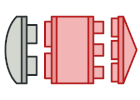
The Adapter pattern allows incompatible interfaces of different classes to work together by converting the interface of one class into another interface that clients expect. It acts as a bridge between two incompatible interfaces, enabling them to collaborate without modifying their existing code.
2. Bridge Pattern
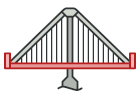
The Bridge pattern decouples an abstraction from its implementation, allowing them to vary independently. It separates the interface from the implementation, enabling both to evolve independently. This pattern is useful when you want to handle different variations or implementations of an abstraction.
3. Composite Pattern
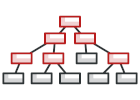
The Composite pattern composes objects into tree-like structures to represent part-whole hierarchies. It allows clients to treat individual objects and compositions of objects uniformly. This pattern is useful when you want to work with complex hierarchical structures as if they were individual objects.
4. Decorator Pattern
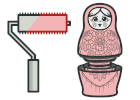
The Decorator pattern dynamically adds new behaviors or responsibilities to an object without modifying its structure. It provides a flexible alternative to subclassing, allowing objects to be extended with additional functionalities at runtime.
5. Facade Pattern

The Facade pattern provides a unified interface to a set of interfaces in a subsystem. It simplifies complex systems by providing a higher-level interface that makes the subsystem easier to use. This pattern is useful when you want to provide a simplified interface to a complex subsystem.
6. Flyweight Pattern
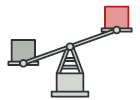
The Flyweight pattern minimizes memory usage by sharing data across multiple objects. It allows for the efficient support of large numbers of similar objects, by sharing common data and reducing redundancy. This pattern is useful when you need to create a large number of similar objects that can share data.
7. Proxy Pattern
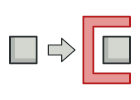
The Proxy pattern provides a surrogate or placeholder object to control access to another object. It acts as a wrapper or intermediary between the client and the actual object, providing additional functionality such as lazy initialization, access control, or caching.